
Collagen Stimulator: The Complete Guide to Types, Results and Recovery
Collagen stimulators prompt your skin to build new collagen over weeks and months. See the main types, who suits treatment, which areas they treat, when results show and how they differ from hyaluronic acid fillers.


Quick Answer
- What: Injectable materials prompting your skin to build new collagen over weeks and months
- Main types: Poly-L-lactic acid (PLLA), calcium hydroxylapatite (CaHA) and polycaprolactone (PCL)
- Treats: Volume loss, early skin laxity, thin or crepey skin and a tired look
- Sessions: Often 1 to 3, spaced 4 to 6 weeks apart
- Results: Build gradually over 2 to 3 months
- Duration: Often 12 months or longer, depending on the material
- Downtime: Swelling and bruising for a few days in most people
What Is a Collagen Stimulator?
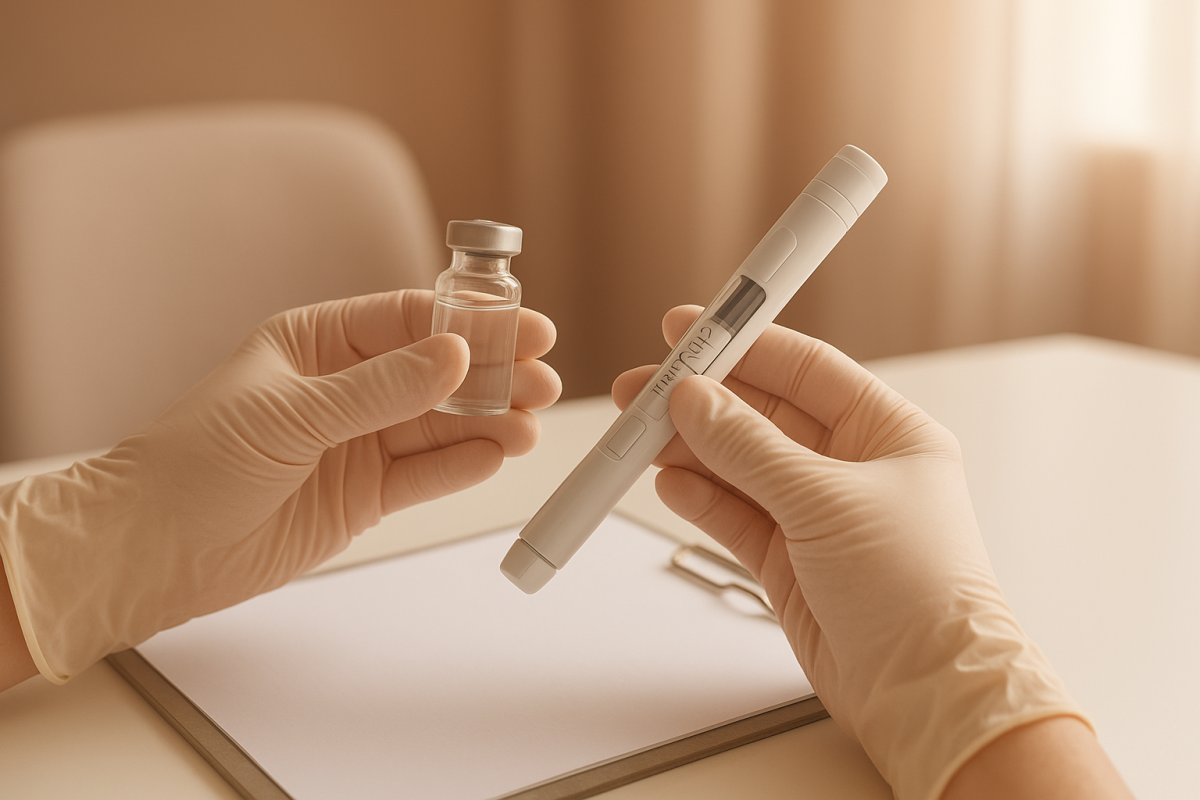
A collagen stimulator is an injectable material your doctor places under the skin. Your body reacts to the material by producing new collagen around each particle. Collagen gives skin firmness and structure. Levels fall with age, and sun exposure speeds up the loss.
Hyaluronic acid fillers add volume straight away. Collagen stimulators work slower. Your own tissue does most of the work, so results look soft and build over time. See the collagen stimulator treatment page.
Which Types of Collagen Stimulator Exist?
| Material | Action | Results Show | Typical Duration |
|---|---|---|---|
| Poly-L-lactic acid (PLLA) | Microparticles prompt steady collagen growth | Gradually over 2 to 3 months | Often up to 2 years after a full course |
| Calcium hydroxylapatite (CaHA) | A gel gives some lift on the day. Particles then prompt collagen. | Partly on the day, then builds | Often 12 to 18 months |
| Polycaprolactone (PCL) | A gel carrier adds volume. Particles prompt collagen over months. | Partly on the day, then builds | 1 to 2 years or longer, by formula |
Your doctor picks the material by your concern, skin thickness and treatment area. Read about calcium filler for more on CaHA.
Who Suits Collagen Stimulator Treatment?
- Adults with early skin laxity on the cheeks, jawline or neck
- People with gradual volume loss in the temples or mid-face
- People with thin, crepey skin on the neck, chest, hands or arms
- People wanting a gradual, natural change over a sudden one
- People after weight loss with hollowing in the face
Collagen stimulators do not replace surgery for heavy skin sagging. Your doctor explains which result suits your skin.
Who Should Avoid or Delay Treatment?
| Situation | Guidance |
|---|---|
| Pregnancy or breastfeeding | Avoid |
| Active skin infection or acne in the area | Wait until healed |
| Autoimmune conditions | Doctor assessment first |
| History of keloid scars | Doctor assessment first |
| Blood-thinning medication | Doctor assessment first. Higher bruising risk. |
| Recent dental work or illness | Wait 2 weeks |
| Wedding or event within 6 weeks | Book earlier, so results build in time |
Which Areas Does a Collagen Stimulator Treat?
- Temples: Softens hollowing at the side of the forehead
- Cheeks and mid-face: Restores support lost with age
- Jawline: Improves definition and supports early jowling
- Neck and chest: Firms thin, crepey skin
- Hands: Softens visible veins and tendons
- Body: Arms, knees and buttocks for skin quality and laxity
Lips and the area under the eyes are not treated with these materials. Fine hyaluronic acid fillers or skin injectables suit these areas better. Read the salmon DNA for under-eyes guide.
What Happens at Your Appointment?
- Consultation: Your doctor reviews your medical history, medication and goals.
- Assessment: Your doctor checks skin thickness, volume loss and laxity in each area.
- Preparation: Your doctor cleans the skin and applies numbing cream where needed.
- Injection: A fine needle or a blunt cannula spreads the material in even layers. Many formulas contain local anaesthetic.
- Massage: Your doctor massages the area to spread the product evenly.
- Review: A follow-up at 4 to 6 weeks to plan the next session.
When Do You See Results?
| Time After Treatment | What to Expect |
|---|---|
| Day 1 to 3 | Swelling gives a fuller look. This settles. |
| Week 1 to 2 | Swelling fades. The area often looks close to before. |
| Week 4 to 6 | Early firmness shows. Next session if planned. |
| Month 2 to 3 | Collagen build shows clearly |
| Month 6 onward | Results settle and hold |
The early swelling fades before new collagen forms. Many people feel no change for the first weeks. Patience matters with this treatment.
What Should You Do After Treatment?
- Follow the massage plan your doctor gives you. For PLLA, many doctors advise 5 minutes, 5 times a day, for 5 days.
- Apply a cool pack for swelling on the first day
- Skip intense exercise, saunas and steam for 24 to 48 hours
- Avoid pressure on the area, such as face-down massage, for 1 week
- Skip alcohol for 24 hours to reduce bruising
- Use SPF 50 daily to protect new collagen
Read dermal filler aftercare for general injectable aftercare rules.
What Are the Side Effects?
- Swelling, redness and tenderness for a few days
- Bruising, fading within 1 to 2 weeks
- Small lumps under the skin, felt more than seen. Massage reduces the risk.
- Uncommon: firm nodules forming weeks later. Your doctor treats these.
- Rare: blockage of a blood vessel. Doctor-led injection and anatomy knowledge reduce this risk.
Unlike hyaluronic acid fillers, collagen stimulators do not dissolve with an enzyme. Read how filler dissolving works to understand the difference. This makes doctor skill and correct dilution important.
Collagen Stimulator vs Hyaluronic Acid Filler: What Is the Difference?
| Feature | Collagen Stimulator | Hyaluronic Acid Filler |
|---|---|---|
| Main action | Builds new collagen | Adds volume on the day |
| Results show | Gradually over 2 to 3 months | Straight away |
| Reversible with an enzyme | No | Yes |
| Suits | Laxity, skin quality, broad volume loss | Lips, defined contours, fine lines |
| Duration | Often 12 months or longer | Often 6 to 18 months by area |
Read how long dermal fillers last for duration by face area.
How Does a Collagen Stimulator Fit With Other Treatments?
- Anti-wrinkle injections: Soften expression lines. Read anti-wrinkle injections vs dermal fillers.
- Skin quality injectables: Support hydration and texture. Read the salmon DNA guide.
- RF microneedling: Targets texture and firmness from the surface. Read RF microneedling vs microneedling.
- 3D face lift: A combined plan for lift and contour. See 3D face lift.
Your doctor sets the order and spacing of each treatment.
How Does Life in Dubai Affect Collagen?
- High UV levels year-round break down collagen faster
- Heat and air conditioning dry the skin and dull texture
- Skip hot outdoor exercise for 48 hours after treatment
- Start a course at least 3 months before a wedding or event. Read the pre-wedding aesthetic timeline.
Frequently Asked Questions
How many sessions do you need?
Many people need 1 to 3 sessions, 4 to 6 weeks apart. Your doctor sets the number by your skin and the material used.
Do collagen stimulators look natural?
Yes. Results build from your own collagen over weeks, so change looks gradual and soft.
Does the treatment hurt?
Most people feel pressure and mild stinging. Numbing cream and anaesthetic in the formula reduce discomfort.
When do you need a top-up?
Many people book a single maintenance session every 12 to 18 months. Your doctor reviews your skin first.
Do collagen stimulators work for men?
Yes. Men often have thicker skin, so the doctor adjusts the plan and keeps a natural, masculine contour.
Is the treatment reversible?
No. Collagen stimulators do not dissolve with an enzyme. The material breaks down naturally over time.
Related Guides
- How Long Do Dermal Fillers Last?
- Dermal Filler Aftercare
- Salmon DNA Skin Treatment: The Complete Guide
- Face Contouring: The Complete Guide
- Anti-Wrinkle Injections vs Dermal Fillers
Book a Consultation
Want firmer skin with a gradual, natural result? Message us on WhatsApp to book your consultation.
This article is for general educational purposes and does not replace a personalised consultation with a licensed medical aesthetics provider. Individual results vary.