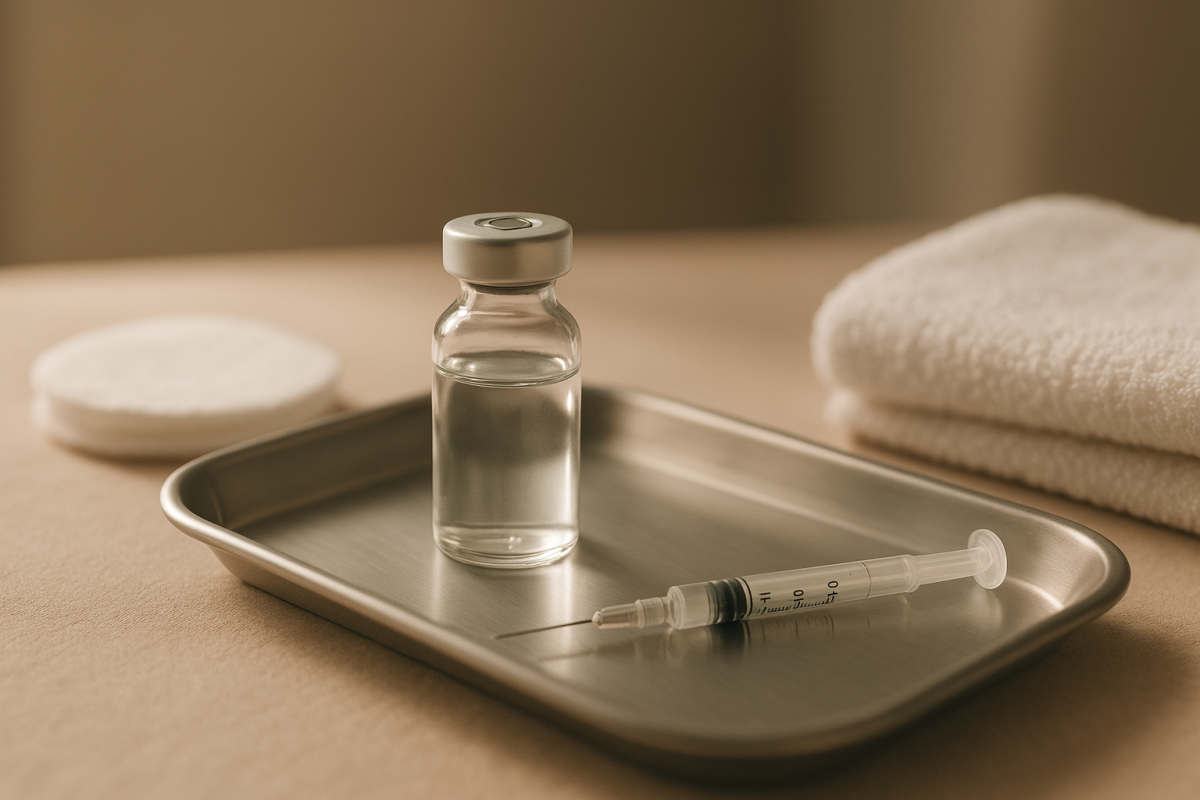

Are Peptide Injections Legal and Safe in the UAE? What the 2026 Rules Mean
Peptide injections are legal in the UAE only with an EDE-registered product, a prescription and a licensed clinic. See the 2026 rules, the risks of online sellers, and a 4-point patient checklist.

Last updated: November 2026
Quick Answer
- Legal: Only with a product approved by the Emirates Drug Establishment (EDE), a doctor’s prescription and a licensed clinic or pharmacy
- 2026 rules: DHA and the Department of Health Abu Dhabi issued new circulars on handling peptide products in healthcare facilities
- Online sellers: The EDE acted against 71 sources and referred 14 influencers in July 2026
- Safety: Approved peptide medicines have known side effects. Unapproved products carry unknown risks.
What Are Peptide Injections?
Peptide injections are medicines or products made from short chains of amino acids and given under the skin or into a muscle.
Some peptides are established medicines. Insulin is a peptide. So are GLP-1 receptor agonists such as semaglutide and tirzepatide, prescribed for type 2 diabetes and weight management.
Other peptides, such as BPC-157 and TB-500, are sold online for injury recovery, anti-ageing or muscle gain, with limited human research behind them. Peptides in skincare serums form a separate group. They are applied to the skin and have no effect on the whole body.
Are Peptide Injections Legal in the UAE?
Yes, but only through approved Emirates Drug Establishment routes, with a prescription, inside a licensed clinic or pharmacy.
The EDE is the federal authority for medicines and medical products in the UAE. A peptide injection is legal when three conditions are met:
- The product is approved for use in the UAE
- A licensed doctor has assessed you and written a prescription
- A licensed healthcare facility supplies and administers the product
The EDE has stated that describing a product as a “peptide” does not mean the product is an approved medicine.
What Changed in 2026?
UAE health authorities issued new rules on how healthcare facilities handle peptide products.
- Dubai: DHA issued “Regulations for Handling Peptide Products in Healthcare Facilities” to all DHA-licensed facilities and professionals on 29 July 2026 (CIR-2026-00000107), followed by a further circular under the same title on 10 September 2026 (CIR-2026-00000167).
- Abu Dhabi: DoH Circular 148/2026 (31 July 2026) set a risk-based approach. Topical cosmetic peptides with no effect on the whole body stay under existing pathways. Peptides with whole-body effects require full clinical records, post-treatment monitoring, adverse event reporting and no misleading promotion.
For patients, the message is clear. Peptide treatment belongs inside a licensed clinic, with a doctor’s assessment and follow-up.
What Happened in the 2026 Crackdown on Illegal Peptide Sellers?
In July 2026, the EDE took regulatory action against 71 sources found marketing, promoting or selling unapproved peptide products for weight loss.
According to EDE statements reported by Al Etihad, Khaleej Times and Gulf News, the action included 14 establishments registered with local authorities. The EDE also referred 14 social media influencers to the National Media Authority.
The EDE said most concerns came from online platforms. Inspections found no unauthorised peptide products in licensed pharmaceutical warehouses under EDE supervision.
Are Peptide Injections Safe?
Approved peptide medicines have known safety profiles when a doctor prescribes and monitors them. Unapproved peptides carry unknown risks.
What Are the Side Effects of Approved Peptide Medicines?
For GLP-1 receptor agonists, the most common side effects are nausea, vomiting, diarrhoea, constipation, reduced appetite and injection-site reactions. Less common but serious risks include pancreatitis, gallbladder problems, kidney strain from dehydration, and low blood sugar when combined with some diabetes medicines.
What Extra Risks Come With Unapproved Products?
- Wrong dose, or a different ingredient from the label
- Contamination, leading to infection or fever
- Severe allergic reactions
- No batch traceability if a problem appears
- Heat damage during shipping in UAE summer temperatures
Who Should Avoid Peptide Injections?
Several groups should not receive peptide injections, and only a doctor’s assessment confirms suitability.
- Pregnant or breastfeeding women, and women planning pregnancy
- People with a personal or family history of medullary thyroid cancer or multiple endocrine neoplasia type 2 (for GLP-1 medicines)
- People with a history of pancreatitis
- People with a history of eating disorders
- Anyone unable to attend follow-up appointments and blood tests
How Do You Check a Peptide Treatment Is Legitimate?
Confirm four things before any peptide injection: a prescription, a licensed clinic, an approved product and doctor monitoring.
- Prescription: A licensed doctor reviews your medical history, current medicines and blood tests before prescribing.
- Licensed clinic: Ask the clinic for its health authority facility licence and the doctor’s licence number.
- Approved product: Ask for the product name, manufacturer and batch number.
- Doctor monitoring: Expect follow-up visits, dose reviews and clear instructions on side effects.
Warning signs include sales without a prescription, unusually low prices, sellers active only on social media, unclear packaging and “research use only” labels.
Does “Peptide” Mean Approved? The Retatrutide Example
No. Being a peptide says nothing about approval, and retatrutide shows why.
Retatrutide is an investigational weekly injection developed by Eli Lilly. The molecule acts on three hormone receptors: GLP-1, GIP and glucagon. Phase 3 trials are under way, and the US FDA has not approved retatrutide.
During the July 2026 crackdown, the EDE warned UAE residents against buying unapproved peptide products promoted online, including retatrutide.
How Do Licensed and Unlicensed Peptide Sources Compare?
| Factor | Licensed UAE Clinic | Online or Social Media Seller |
|---|---|---|
| Prescription | Required | Not required |
| Product approval | Approved for UAE use | Unknown or unapproved |
| Medical assessment | Before treatment | None |
| Storage and cold chain | Controlled | Uncontrolled |
| Follow-up care | Included | None |
What Should UAE Residents Consider During Ramadan and Summer?
Fasting and heat both change how your body handles injectable treatments, so plan both with your doctor.
During Ramadan, nausea and reduced appetite from GLP-1 medicines add to the strain of long fasting hours. Your doctor might adjust the dose or timing to lower the risk of dehydration and low blood sugar. In summer, follow the storage instructions on the pack and never leave medicines in a parked car.
Frequently Asked Questions
Is buying peptide injections online safe in the UAE?
No. The EDE has warned residents against buying unapproved peptide products online. Use only a licensed clinic or pharmacy with a prescription.
Do the 2026 rules affect peptide skincare?
In Abu Dhabi, DoH Circular 148/2026 keeps topical cosmetic peptides under existing regulatory pathways.
Is retatrutide approved?
No. Retatrutide is investigational, and the EDE has warned residents against buying the product online.
How do I check whether a clinic is licensed?
Ask the clinic for its health authority facility licence and the doctor’s licence number.
What should I do after a side effect from a peptide injection?
Stop the product, contact your doctor, and seek urgent care for severe symptoms such as breathing difficulty or severe abdominal pain.
Are “research use only” peptides suitable for personal use?
No. A “research use only” label means the product is not for human use.
Key Takeaways
- Peptide injections are legal in the UAE only with an approved product, a prescription and a licensed facility
- DHA and DoH Abu Dhabi issued 2026 circulars on handling peptide products in healthcare facilities
- In July 2026, the EDE acted against 71 sources and referred 14 influencers to the National Media Authority
- “Peptide” does not mean approved. Retatrutide remains investigational.
- Check for a prescription, a licensed clinic, an approved product and doctor monitoring before any injection
Book a Consultation
Considering a peptide treatment? A Diva Clinic doctor will review your health and explain the options approved in the UAE. Message us on WhatsApp to book your consultation.
This article is for general educational purposes and does not replace a personalised consultation with a licensed doctor. Individual results vary.