
Is Tear Trough Filler Right for You? Candidates, Results and Risks
Who suits tear trough filler, how long under-eye filler lasts, the risks of swelling and a blue tint, recovery in the UAE, and when another treatment fits better.

Last updated: November 2026
Quick answer
- Tear trough filler is a soft hyaluronic acid gel placed under the eye to soften a hollow or shadowed groove between the lower eyelid and the cheek.
- The best results come in people with true hollowing, good skin quality and no large under-eye bags.
- Puffy bags, heavy skin laxity, fluid swelling and pigment-driven dark circles respond poorly to filler and often look worse after treatment.
- US approval studies for under-eye fillers report results lasting around 12 to 18 months, depending on the product. Results vary from person to person.
- The under-eye area carries higher risks than most face areas, including swelling, a blue tint and rare blood vessel blockage. Choose a DHA-licensed doctor with a hyaluronic acid product and a clear complication plan.
What is tear trough filler?
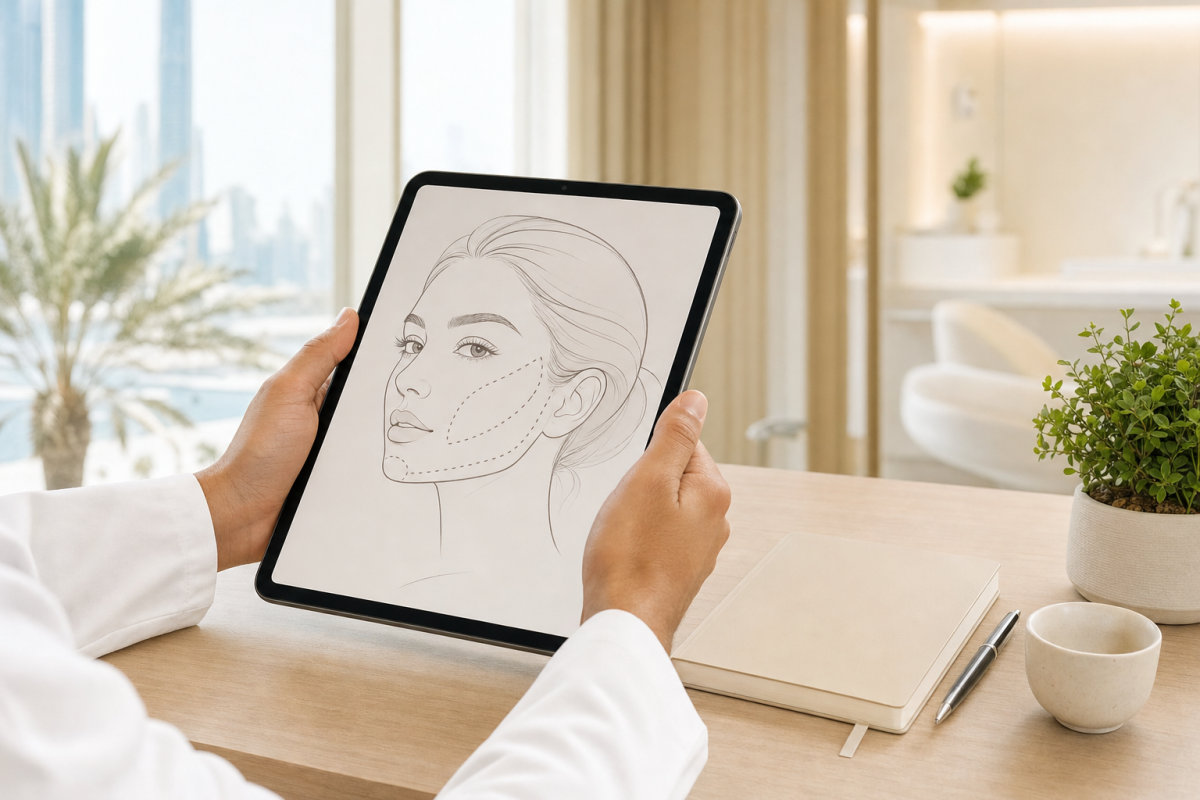
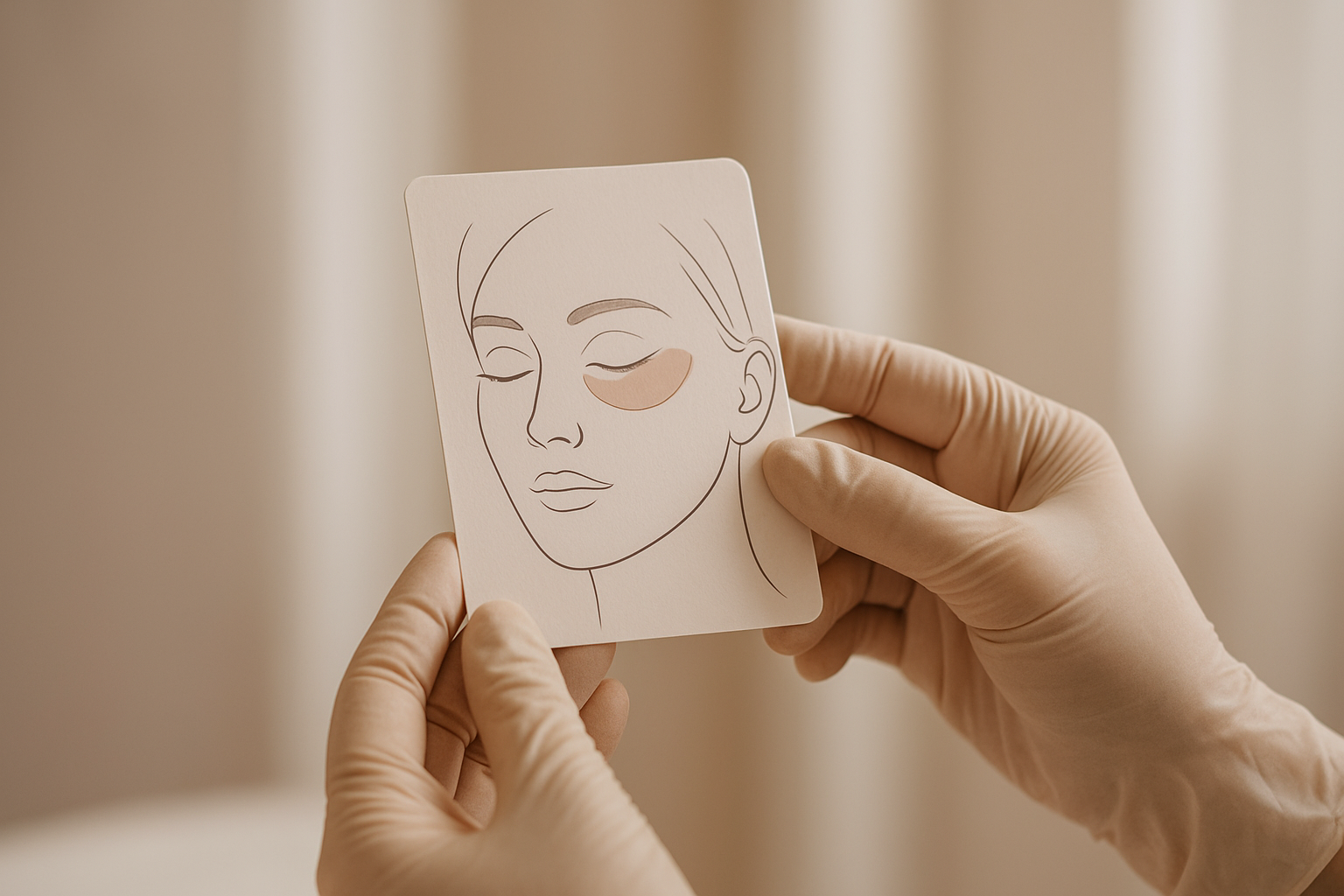
Tear trough filler is an injection of hyaluronic acid gel into the groove running from the inner corner of the eye down toward the cheek. Doctors call this area the tear trough or infraorbital hollow.
With age, genetics or weight loss, the fat and bone support under the eye thin out. The groove deepens and casts a shadow, which reads as tiredness even after a full night of sleep. A small amount of soft filler restores support and reduces the shadow.
Several hyaluronic acid fillers now hold US Food and Drug Administration (FDA) approval specifically for under-eye hollows, with the most recent approval in 2026. In the UAE, ask your doctor to confirm the product is registered for use here.
Who is a good candidate for tear trough filler?
Good candidates have a hollow, not a bulge. Your doctor checks your face in daylight, from the front and the side, and often asks you to look up and smile.
You are more likely to suit treatment if you have:
- A visible groove or hollow under the eye, often present since your 20s or 30s
- Shadows caused by the shape of the area, not by skin colour
- Reasonable skin thickness and elasticity under the eye
- Little or no morning puffiness
- Realistic goals, such as a fresher, less tired look
Who should avoid tear trough filler?
Filler adds volume. Where the problem is excess volume, fluid or loose skin, filler makes the area heavier. Your doctor often suggests a different route if you have:
- Puffy under-eye bags: fat pushing forward under the eye. Filler next to a bag tends to enlarge the overall bulge. Surgery to the lower eyelid suits many of these cases better.
- Fluid swelling or malar bags: puffiness changing with salt, sleep, allergies or the time of day. Filler holds water and worsens this pattern.
- Heavy skin laxity or very thin, crepey skin: filler shows through thin skin and does not tighten loose skin.
- Pigment-driven dark circles: brown or grey colour in the skin itself. Filler does not change skin colour. Read dark circles under the eyes to tell the types apart.
- Pregnancy or breastfeeding: filler studies exclude pregnant and breastfeeding women, so doctors wait.
- Active infection, cold sores or skin inflammation near the eyes: treatment waits until the skin heals.
- Bleeding disorders, blood thinners, autoimmune conditions or a history of filler reactions: tell your doctor. Some of these rule out treatment and others need extra planning.
US approvals for under-eye fillers cover adults aged 21 or 22 and older, depending on the product.
How does tear trough filler compare with other under-eye treatments?
| Concern | Usual first option | Why |
|---|---|---|
| Hollow groove with a shadow | Hyaluronic acid tear trough filler | Restores lost support and softens the shadow |
| Thin, crepey skin with fine lines | Skin quality treatments such as polynucleotides | Aims to improve skin quality, not add volume |
| Brown or grey pigment | Sun protection, topical care and selected lasers or peels | Targets colour in the skin itself |
| Puffy fat bags | Surgical assessment for lower eyelid surgery | Removes or repositions the fat causing the bulge |
| Hollow groove plus cheek volume loss | Cheek support first, then a small under-eye amount if needed | Cheek support lifts the lower lid area and reduces the amount needed under the eye |
For skin quality options, read salmon DNA for under-eyes.
What happens during a tear trough filler appointment?
The appointment usually takes 30 to 45 minutes, including numbing.
- Assessment: your doctor reviews your medical history, examines the under-eye and cheek together and agrees a plan with you.
- Numbing: a numbing cream goes on the skin. Most under-eye fillers also contain a local anaesthetic.
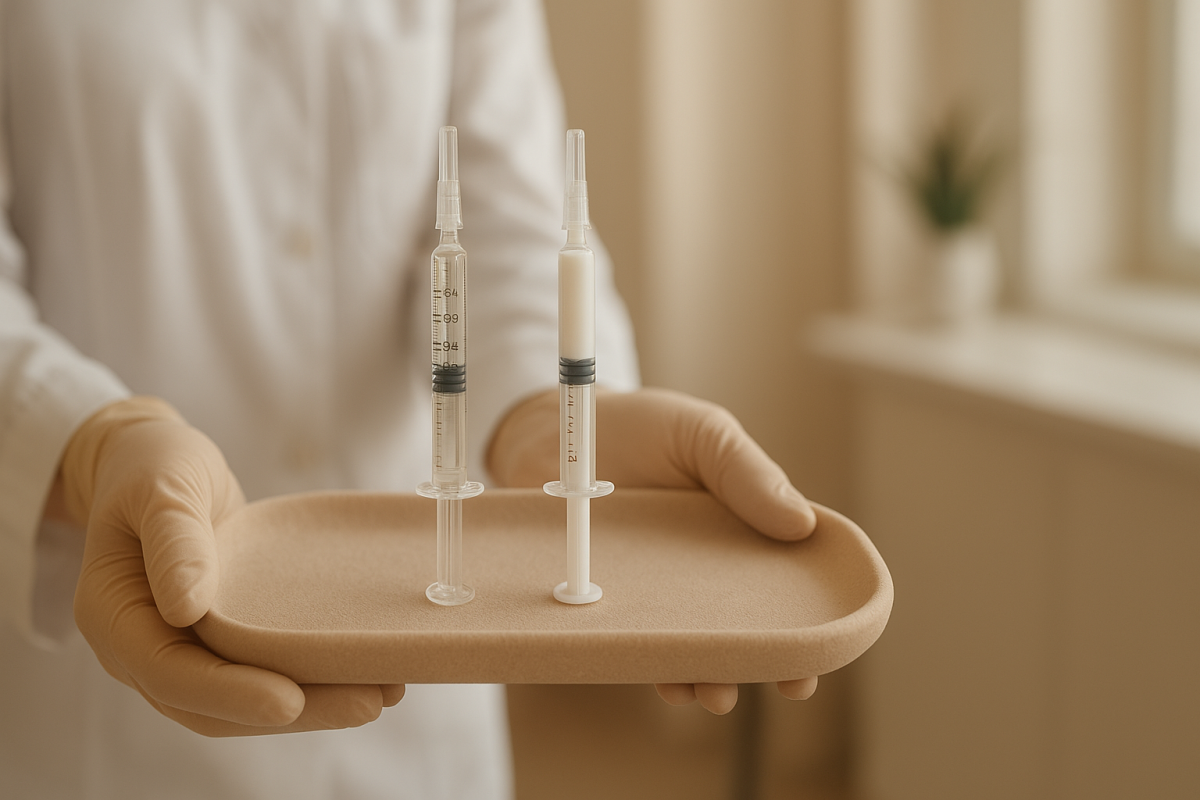
- Injection: your doctor places small amounts of gel deep, close to the bone, with a fine blunt cannula or a needle. Deep placement lowers the chance of a visible bump or blue tint.
- Review: your doctor checks the result sitting upright and gives aftercare instructions.
Doctors use small volumes in this area. Under-treating and topping up later is safer than overfilling. In US approval studies, an optional touch-up was allowed about one month after the first session.
How long does tear trough filler last?
Under-eye fillers tend to last longer than lip filler, because the area moves less. US approval data report results lasting around 12 to 18 months, depending on the product. Some people keep part of the result for longer.
Duration depends on the product, the amount, your metabolism and your lifestyle. Read how long dermal fillers last for a full breakdown by area.
What are the risks of tear trough filler?
The under-eye area has thin skin, many small blood vessels and delicate drainage channels. This makes the area one of the more demanding places to inject.
Common and short-lived:
- Swelling, tenderness and redness for a few days
- Bruising, which sometimes lasts up to two weeks
- Mild lumpiness while the gel settles
Less common:
- Persistent swelling (malar oedema): one ophthalmology review reports this in up to 11% of tear trough cases. Filler compresses local drainage and holds fluid.
- Tyndall effect: a blue-grey tint when gel sits too close to the surface.
- Lumps, unevenness or filler migration.
- Delayed reactions: swelling or nodules weeks, months or even years later, sometimes after a viral illness.
Rare but serious:
- Vascular occlusion: filler blocking a blood vessel. Warning signs include sudden severe pain, skin turning white or dusky, or any change in vision. Vision changes after facial filler are a medical emergency.
Hyaluronic acid filler has one important safety advantage. A doctor dissolves the gel with an enzyme called hyaluronidase if a problem appears. Read how filler dissolving works. Permanent and semi-permanent fillers are not suitable under the eyes for this reason.
What does recovery look like?
| Stage | What to expect |
|---|---|
| Same day | Swelling and tenderness. Use a clean cold pack gently. Do not press or massage the area unless your doctor tells you to |
| First 48 hours | Skip intense exercise, saunas, steam rooms, hot yoga and alcohol. Sleep with your head slightly raised |
| First week | Most swelling settles. Avoid eye makeup on the first day and rubbing your eyes. Keep salty food low, as salt worsens puffiness |
| Around 2 to 4 weeks | The gel settles. Your doctor reviews the result and decides whether a small top-up suits you |
In the UAE heat, plan treatment away from long outdoor days, beach trips and hot sport for the first few days. Heat increases swelling. If you treat during Ramadan, drink enough water between iftar and suhoor, as dehydration and late salty meals affect under-eye puffiness. Read dermal filler aftercare for full instructions.
What should you ask at your consultation?
- Are my dark circles caused by hollowing, pigment, puffiness or a mix?
- Would cheek support help more than treating under the eye directly?
- Which product do you use, is the product hyaluronic acid, and is the product registered in the UAE?
- Do you use a cannula or a needle, and why?
- How many under-eye treatments do you perform each month?
- What happens if I develop swelling, a lump or a blue tint?
- Do you keep hyaluronidase in the clinic, and what is your plan for a vascular emergency?
Check your doctor and clinic licence before booking. Read how to check a clinic or doctor is licensed in Dubai or Abu Dhabi.
Frequently asked questions
Does tear trough filler get rid of dark circles?
Filler improves dark circles caused by shadows from a hollow groove. Filler does not change brown or grey pigment in the skin or remove puffy fat bags.
Is tear trough filler painful?
Most people feel pressure and mild discomfort. Numbing cream and the local anaesthetic inside most under-eye fillers keep the treatment comfortable.
How long does swelling last after tear trough filler?
Most swelling settles within a few days to a week. Bruising sometimes lasts up to two weeks. Swelling beyond a few weeks needs a review with your doctor.
How long does tear trough filler last?
US approval studies report results lasting around 12 to 18 months, depending on the product. Results vary from person to person.
Can tear trough filler be reversed?
Yes, when the filler is hyaluronic acid. A doctor dissolves the gel with an enzyme called hyaluronidase.
What is the blue tint some people get after under-eye filler?
The blue-grey tint is called the Tyndall effect. Gel placed too close to the surface scatters light. Dissolving the filler usually corrects the tint.
At what age do people get tear trough filler?
Age matters less than anatomy. Some people inherit hollows and seek treatment in their 20s or 30s. US approvals cover adults aged 21 or 22 and older, depending on the product.
Key takeaways
- Tear trough filler treats hollowing and shadow, not pigment, puffiness or loose skin.
- The right candidate has a groove, good skin quality and no large fat bags.
- US approval data report results lasting around 12 to 18 months, depending on the product.
- Small amounts, deep placement and a staged plan lower the risk of swelling and a blue tint.
- Choose hyaluronic acid filler and a DHA-licensed doctor with a clear complication plan. Results vary from person to person.
Related guides
- Dark Circles Under the Eyes: Causes, Types and Treatment Options
- Salmon DNA for Under-Eyes: What You Need to Know
- How Long Do Dermal Fillers Last? Duration by Face Area
- How Does Filler Dissolving Work? Hyaluronidase Explained
- Face Contouring: The Complete Guide
Book a consultation
Not sure whether your under-eye shadows come from hollowing, pigment or puffiness? Book a consultation with a licensed Diva Clinic doctor. Your doctor examines the under-eye and cheek together, explains which option suits you, covers the risks and agrees a written plan with you before any treatment. Message us on WhatsApp.
This article is for general education and does not replace a personal consultation with a licensed medical provider. Results vary from person to person.